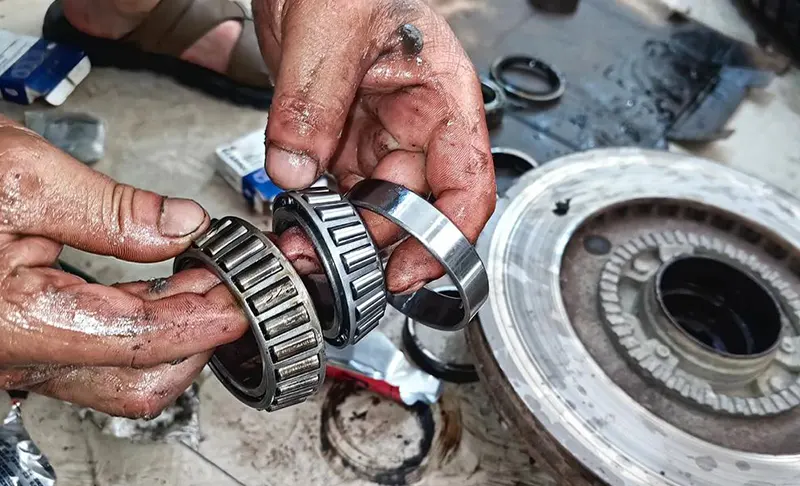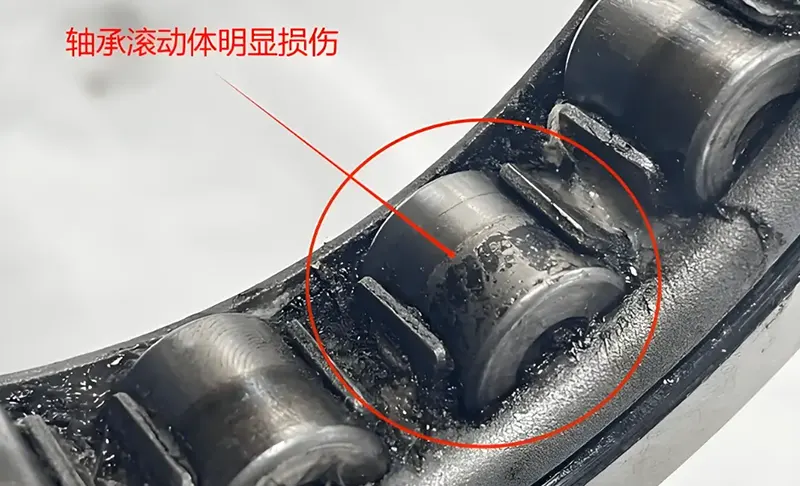
To address the performance limitations of cylindrical roller bearings when subjected to axial loads, the industry has introduced cylindrical roller bearings with optimised flange contact featuring the TB design. In standard cylindrical roller bearings, when subjected to axial loads, high contact stresses and significant frictional heat tend to develop between the roller end faces and the flanges, limiting their axial load-carrying capacity and high-speed performance. The TB design optimises the curvature of the roller end faces, distributing the load over a significantly larger surface area, thereby effectively reducing contact pressure and improving lubrication conditions. At the same time, the use of new, highly wear-resistant materials and surface treatment processes further reduces sliding friction. Bearings featuring this design can withstand 1.5 times the axial load of standard bearings, with friction torque under axial loading reduced by up to 50 per cent. Temperature rise is significantly reduced and bearing service life is markedly extended, making them particularly suitable for demanding operating conditions where high axial loads and high rotational speeds coexist.
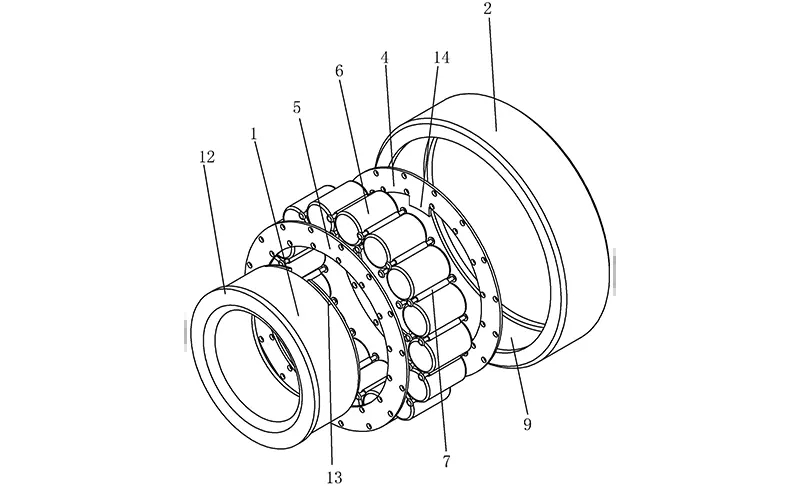
Progress has also been made in the research and development of cylindrical roller bearings for high-end CNC machine tools, with a focus on optimising the contact between the raceways and rollers. Machine tool spindles impose extremely stringent requirements on bearing rotational speed, rigidity and temperature rise control. By precisely profiling and optimising the geometry of the inner and outer ring raceways and the rolling elements, the technical team has effectively reduced the coefficient of friction, thereby lowering operating temperature rise at source and ensuring more stable high-speed operation. Furthermore, the bearing employs an optimised cage structure to ensure smooth movement and balanced load distribution of the rolling elements during high-speed operation. Following multiple rounds of in-machine testing, the bearing has been verified to achieve industry-leading standards in terms of precision retention, vibration resistance and temperature rise control, providing reliable support for the efficient and precise machining of high-end CNC machine tool spindles.